
Introduction
In 2025, taking care of your mental health is more important than ever. Digital therapy platforms are revolutionizing the way people access professional help. The best digital therapy platforms for mental health offer flexible, personalized, and expert care from your phone, tablet, or computer. They can help you manage anxiety, depression, burnout, or manage your emotions.
These platforms are more than just a convenient option; they are now an essential part of the modern mental health ecosystem. In this guide, we’ll try to highlight the best digital therapy platforms available today, how they work, and which ones are best for you based on your needs as well as where you live.
👉 Also Read: Mental Health Awareness: Why It’s a Necessity in 2025
Table of Contents
2. What Are Digital Therapy Platforms?
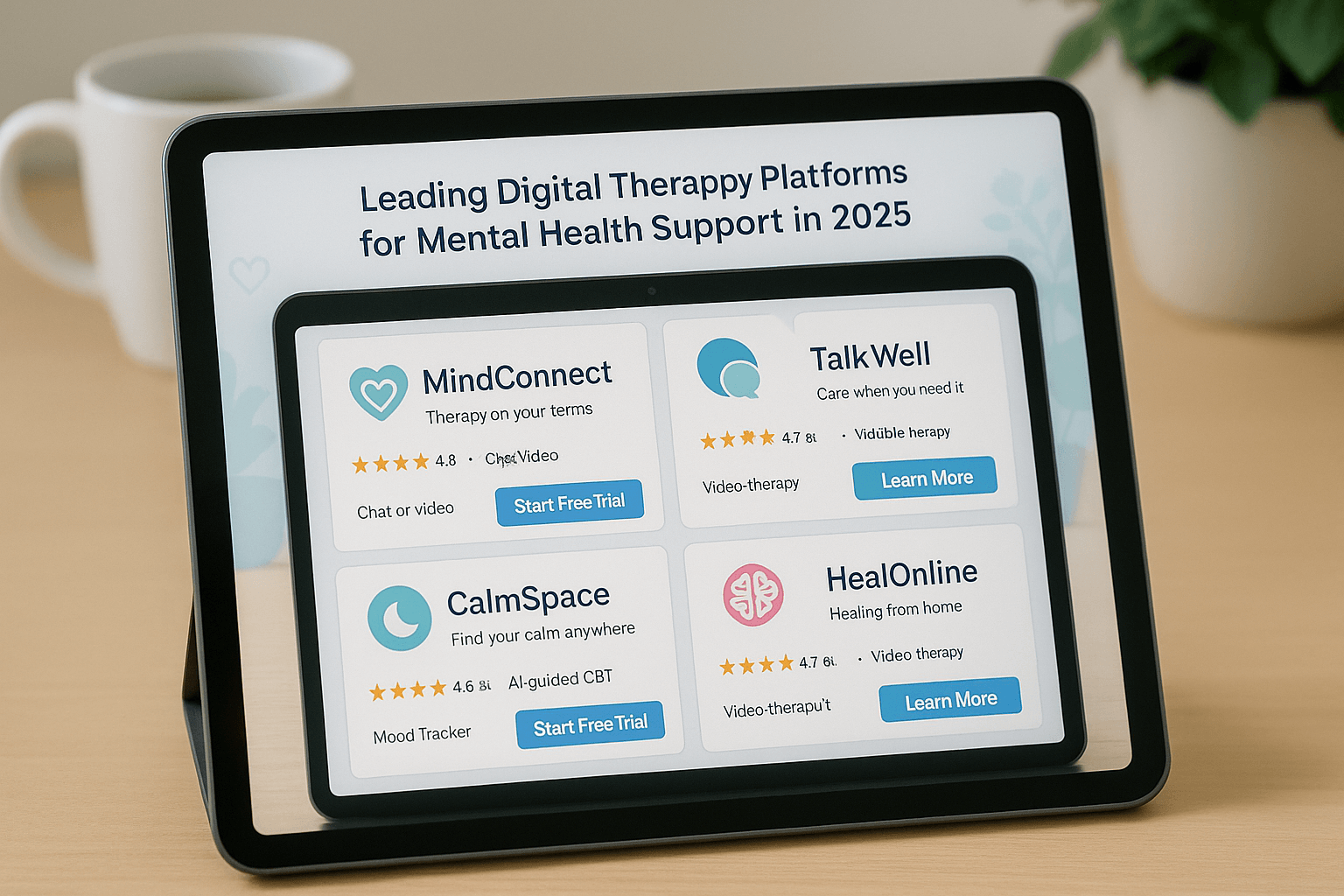
Digital therapy platforms are revolutionizing the way people access mental health support by bringing professional care directly to their fingertips. These innovative online services – whether accessed through apps, websites, or integrated health systems – connect users with licensed mental health professionals in real time. Unlike traditional therapy that often requires in-person visits and strict schedules, digital therapy platforms offer flexible, remote solutions that fit modern lifestyles. Users can schedule one-on-one video or audio sessions with certified therapists, participate in live group therapy discussions, or participate in evidence-based self-help programs. Many platforms also include AI-powered mood tracking, interactive cognitive exercises, guided meditations, and secure digital journaling features – all designed to support mental wellness anytime, anywhere. Thanks to ongoing advances in telehealth and digital communication, digital therapy platforms are becoming increasingly effective, trusted, and widely adopted, not only in the United States, but around the world.
3. Why Digital Therapy Is Booming in 2025
In 2025, the demand for accessible and effective mental health care has never been higher—and digital therapy platforms have emerged as one of the best solutions. The lingering impact of the pandemic, rising mental health challenges among youth and working professionals, and the global shortage of in-person therapists have all accelerated the shift toward online care. According to the World Health Organization, the use of digital mental health tools has more than doubled worldwide since 2020, proving that virtual care is no longer just a trend—it’s a necessity.
Key drivers behind this rapid growth include:
- 🌐 Accessibility for rural and underserved communities
- 🤝 Reduced stigma around seeking help online
- 💸 Affordability compared to traditional face-to-face therapy
- ⏰ Flexibility that fits modern, busy lifestyles
As more people seek mental health support that’s private, affordable, and easy to access, choosing the best digital therapy platform in 2025 is now a vital step toward long-term emotional well-being.
📌 Explore more: Mental Health Support Services in 2025
4. Key Features to Look for in a Digital Therapy Platform
When choosing the best digital therapy platform for your mental health needs in 2025, it’s important to look beyond the brand name. Prioritize platforms that offer licensed therapists, flexible scheduling, secure video or messaging options, and personalized treatment plans. The right platform should also support your region, protect your privacy, and deliver a user-friendly experience that makes getting help easier and more effective.
Before choosing any digital therapy platform, consider these essential features:
• HIPAA-compliant data protection
• Variety of therapy methods (CBT, DBT, ACT, etc.)
• Licensed and vetted professionals
• Real-time or scheduled sessions
• AI/mood tracking & journaling

5. Top 7 Digital Therapy Platforms in 2025
Here are the highest-rated digital therapy platforms this year:
| Platform | Best For | Price Range | Unique Feature |
| BetterHelp | One-on-one therapy | $60–90/week | Text + video access |
| Talkspace | Medication + therapy | $70–120/week | Psychiatry options |
| Woebot Health | AI-supported self-care | Free/Premium | 24/7 AI therapist |
| Cerebral | Ongoing care plans | $99/month | Therapy + Rx combos |
| Calmerry | Affordable plans | $50+/week | Personal matching |
| MindBeacon | Canada-based support | $60+/week | Evidence-based CBT |
| Online-Therapy.com | Guided therapy programs | $40+/week | Worksheets + therapist support |

📌 Check out: Free Mental Health Resources by Country
6. Digital Therapy vs Traditional Therapy
Traditional in-person therapy has long been the gold standard for mental health treatment, offering face-to-face interaction and a structured setting. However, in 2025, digital therapy platforms have rapidly evolved to rival—and in many cases, surpass—the accessibility and convenience of traditional therapy. While both forms of care have their place, the rise of digital therapy platforms is reshaping how people around the world seek and receive mental health support.
One of the most significant advantages of digital therapy platforms is accessibility. Unlike brick-and-mortar clinics, which can be limited by geography or availability, digital platforms remove physical barriers—allowing users in rural, remote, or underserved areas to connect with qualified therapists from anywhere. There’s no need to commute, navigate traffic, or take time off work—therapy is now just a click away.
Affordability is another key factor. Many digital therapy platforms offer pricing models that are 30–50% lower than traditional therapy sessions. This cost-effectiveness makes consistent care more sustainable, especially for those without comprehensive insurance coverage.
Flexibility is also built into the design of digital services. Whether you prefer evening sessions after work, asynchronous messaging with your therapist, or 24/7 access to self-guided tools, digital therapy platforms cater to your schedule rather than the other way around. This level of adaptability is especially appealing to students, parents, shift workers, and others with unpredictable routines.
Finally, comfort is a crucial yet often overlooked benefit. Attending therapy from the privacy of your home can ease anxiety and remove the social stigma that some individuals still feel about seeking mental health support. The relaxed setting of digital therapy platforms often helps users open up more easily and stay engaged over time.
In short, while traditional therapy continues to play an important role, digital therapy platforms offer a more accessible, affordable, and user-centered alternative that fits seamlessly into today’s fast-paced world.

7. Global Mental Health Trends: 2009–2025
Over the past decade and a half, the global approach to mental health care has undergone a massive transformation—and at the heart of that shift is the rapid growth of digital therapy platforms. What began as a niche solution in the early 2010s has evolved into a mainstream mode of support by 2025, driven by technological innovation, rising mental health awareness, and the pressing need for scalable solutions.
The graph below illustrates the dramatic rise in digital therapy usage from 2009 to 2025, highlighting key milestones such as the post-2015 surge in mobile health apps, the COVID-19 pandemic in 2020 which accelerated virtual care adoption, and the global push toward telehealth integration in the years that followed. As traditional healthcare systems became overwhelmed, millions turned to digital therapy platforms for immediate, flexible, and cost-effective care.
From early adopters in the U.S. and UK to newer markets across Asia and Africa, the adoption curve reflects how digital therapy platforms have broken down global barriers to mental health support. This trend is not just about convenience—it represents a fundamental rethinking of how mental health services should be delivered in an increasingly digital and connected world.
As we move further into 2025, the data makes it clear: digital therapy platforms are not just a temporary fix—they’re becoming the foundation of modern mental health care.
Below is a graph showing the rise in digital therapy usage over the last 15 years:

8. Pros and Cons of Using Digital Platforms for Therapy
As digital therapy platforms continue to reshape mental health care in 2025, it’s important to weigh both the benefits and limitations before deciding if they’re the right fit for your needs. While these platforms offer tremendous value and flexibility, they may not be suitable for every situation or individual.
On the plus side, digital therapy platforms shine when it comes to convenience. Users can schedule sessions around their own availability—whether that’s during a lunch break, late at night, or on weekends. This flexibility is particularly beneficial for people with busy lifestyles or unpredictable schedules. They also offer a discreet and private way to access therapy, removing the social pressure or stigma some individuals may feel about walking into a therapist’s office. Additionally, digital therapy platforms are often more affordable than traditional in-person sessions, which makes mental health care accessible to a much broader audience—especially those without insurance or with limited financial resources.
However, it’s equally important to recognize the drawbacks. Most digital therapy platforms are not designed for crisis support and may not be equipped to handle emergencies such as suicidal ideation or severe psychiatric disorders. A reliable internet connection is also essential, and those in low-bandwidth or rural areas may struggle with video-based sessions or app-based features. Furthermore, while digital platforms are excellent for mild to moderate mental health concerns, they may be limited in effectiveness for individuals with complex conditions that require hands-on, long-term clinical supervision.
In short, digital therapy platforms offer a powerful, flexible solution for many—but not all—mental health journeys. Understanding the pros and cons can help users make informed decisions and use these tools to their fullest potential.
9. How to Choose the Right Platform for You
Finding the right digital therapy platform isn’t a one-size-fits-all decision—it depends on your personal needs, goals, and comfort level. Start by thinking about what kind of mental health support you’re looking for and how you prefer to communicate. Some people may thrive with structured therapy sessions, while others prefer more flexible, message-based options. As you explore your choices, consider the following factors:
- Type of therapy offered – Do you need talk therapy, CBT, or psychiatric support with medication?
- Communication style – Are you more comfortable with video calls, phone chats, or texting your therapist?
- Cost and affordability – What’s your budget, and does the platform offer sliding scale or insurance options?
- Therapist credentials – Are the therapists licensed in your region and experienced with your specific concerns?
- Availability and access – Can you get timely appointments, and does the platform work on your devices?
Taking the time to assess these factors can help you choose a platform that feels safe, supportive, and tailored to your mental health journey.
📌 Helpful read: Mental Health Self-Care Tips
Final Thoughts: Choosing the Right Digital Therapy Platform
In 2025, digital therapy platforms have become a powerful, accessible, and trusted form of mental health care. Whether you’re looking for one-on-one counseling, cognitive-behavioral therapy, psychiatric medication, or self-guided support, there’s a platform tailored to your unique needs.
🧠 Pro Tip: Consider your budget, goals, therapist availability, and whether your region offers public healthcare subsidies.
1. 🤔 What is a digital therapy platform?
Answer: A digital therapy platform is an online service that connects users with licensed mental health professionals through virtual means like messaging, video calls, or app-based programs. These platforms provide flexible, confidential, and often more affordable access to therapy, counseling, and psychological support from anywhere.
2. 🧠 Are digital therapy platforms effective for mental health?
Answer: Yes, many studies have shown that digital therapy—especially cognitive behavioral therapy (CBT)—can be just as effective as in-person therapy for common mental health issues like anxiety, depression, and stress. The key is choosing a reputable platform with licensed, qualified therapists and evidence-based approaches.
3. 💸 How much do digital therapy platforms cost in 2025?
Answer: Prices vary depending on the platform and type of service. In 2025, most digital therapy platforms charge between $50 and $130 per week, with some offering monthly subscription plans or one-time session fees. Certain platforms in countries like Canada and Australia also provide free or subsidized services through public health systems or insurance.
4. 🌍 Which platforms are available in my country?
Answer: Here’s a quick regional guide for top platforms:
United States: BetterHelp, Talkspace, Calmerry
United Kingdom: BetterHelp, My Online Therapy, Calmerry
Canada: MindBeacon, BetterHelp
Australia: MyMirror, BetterHelp
Always check the platform’s website to confirm therapist availability in your country.
5. 🆚 BetterHelp vs. Talkspace – Which is better?
Answer: BetterHelp is ideal for general talk therapy with flexible messaging and video options, while Talkspace includes access to psychiatrists who can prescribe medications (U.S. only). If you’re looking for therapy without medication, BetterHelp may offer better value. If you need medication management, Talkspace could be the right fit.
6. 🛡️ Are digital therapy platforms secure and private?
Answer: Reputable platforms use end-to-end encryption, HIPAA-compliant servers (in the U.S.), and GDPR standards (in the UK/EU) to protect your information. Always review the privacy policy of any platform before signing up and ensure they are working with licensed professionals.
7. 🧾 Can I use insurance or public healthcare with these platforms?
Answer: Some platforms like Talkspace (U.S.) and MyMirror (Australia) accept insurance or integrate with public healthcare systems like Medicare. In Canada, MindBeacon is covered by Ontario’s OHIP. UK-based services like My Online Therapy may work in tandem with private insurers but are not yet covered under NHS.
8. 📅 How quickly can I get matched with a therapist?
Answer: Most platforms will match you with a therapist within 24 to 72 hours. Some offer instant booking, especially during business hours. Availability depends on your location, time zone, and therapy preferences.
9. 🧩 Are there specialized therapy options, like LGBTQ+ or trauma-focused care?
Answer: Yes, top platforms like BetterHelp and Calmerry allow users to request therapists based on specific needs, including LGBTQ+ support, grief counseling, trauma recovery, relationship therapy, and more. Always indicate your preferences during the intake questionnaire.
10. 📱 What devices do I need to use a digital therapy platform?
Answer: You can access most platforms via:
– Mobile apps (iOS and Android)
– Desktop browsers (Chrome, Safari, etc.)
– Tablets or laptops
A stable internet connection and privacy-friendly environment are recommended for live sessions.
✅ Call to Action
Ready to improve your mental well-being?
Explore the best digital therapy platform for your region and start your journey toward healthier, more balanced living—today.
👉 For more mental health tools and awareness tips, check out our full guide: Mental Health Awareness: Why It’s a Necessity in 2025
External References: